
As we wrap up 2025, we’re reflecting on what we’re seeing across the industries we serve and highlighting a few considerations clients may want to keep in mind as they plan for the year ahead.
A Year of Steady Support Across Divisions
Throughout 2025, R2M provided planning, permitting, construction, and documentation support for complex projects across Texas and New Mexico. Our teams worked alongside clients at nearly every stage of development, helping navigate regulatory requirements, design challenges, and construction coordination.
2025 Survey Project Highlights
This year, R2M supported nearly every phase of electrical transmission line construction through survey services across Texas and Western New Mexico, including:
- Easement verification within multiple counties
- Verification of transmission line sag and pole locations
- Survey exhibits for New Mexico Department of Transportation (NMDOT) crossings
- A detailed topographic survey for a power generation facility to support site design and construction
These efforts helped keep complex energy infrastructure projects on schedule while meeting planning, permitting, and documentation requirements.
2026 – Looking Ahead
We’re beginning to see a resurgence in subdivision activity for custom home builders as projects paused during higher interest rate periods return to active planning.
Quick tip: For new development, securing surveys, plats, and permits early can help avoid delays and keep projects moving smoothly.
Surveying FAQ: Who Needs a Plat?
One of the most common questions we hear is: “Do I need a plat?” As with many land development questions, the answer depends on location and use.
In Texas: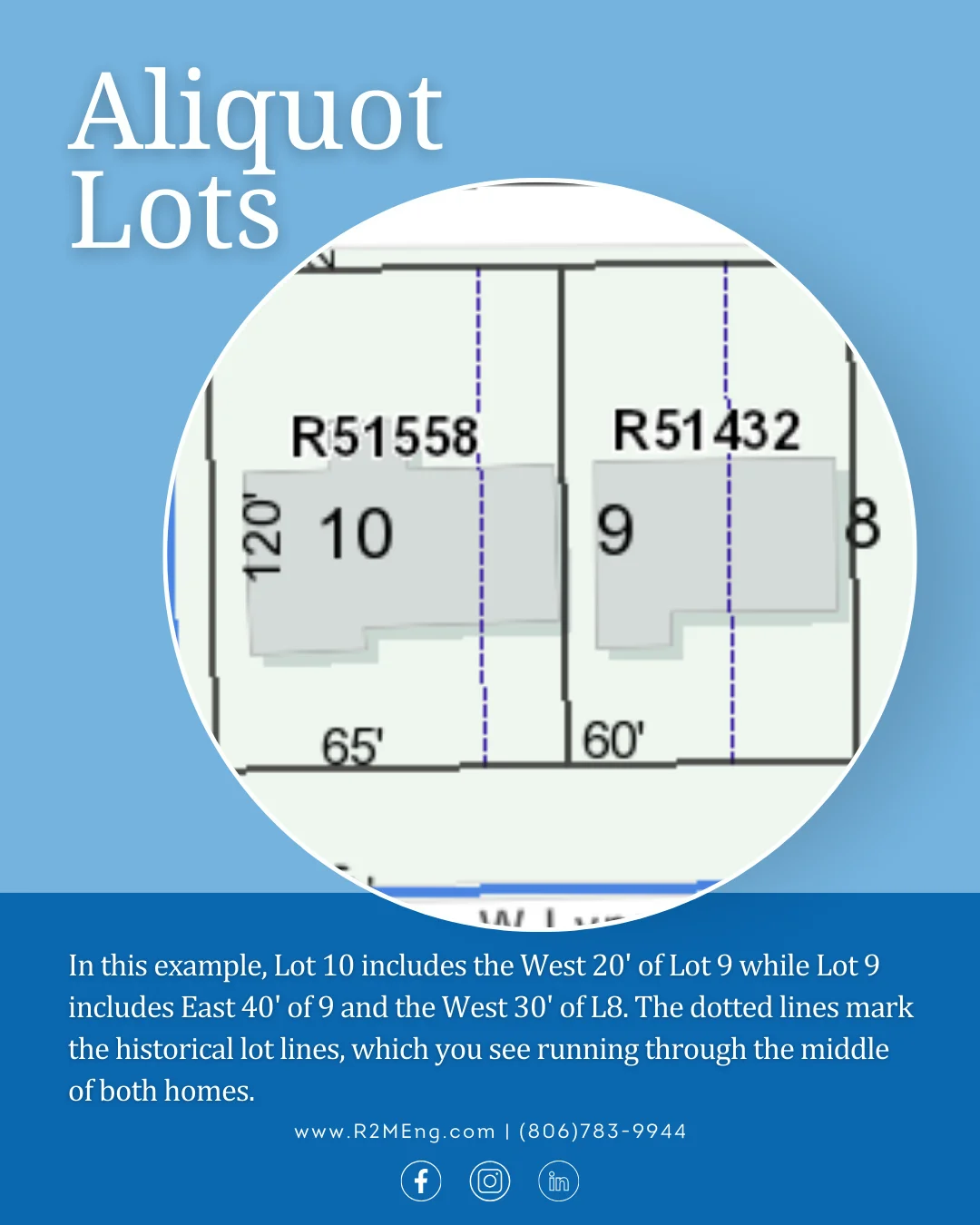
- A plat is typically required for unplatted land under 10.01 acres, or 5.01 acres for VA loans.
- Larger tracts generally require platting anytime land is dedicated to public use.
- Private roads can be a frequent point of confusion; many counties treat neighborhood roads as public if they serve more than the property owner, though local officials have some discretion under state law.
Aliquot Lots (portions of one or more original lots) can also create platting challenges, particularly in cities. Many jurisdictions now require a replat to prevent buildings from crossing boundary lines — a shift from older townsite practices that allowed more flexibility due to very small lot sizes.
If you’re buying, remodeling, or developing property involving aliquot lots, early coordination with a surveyor familiar with local requirements can save time and prevent costly redesigns.
Annual Environmental Reporting Season
As we move into early 2026, many facilities are entering annual environmental reporting season. For some clients, these reports are required every year as part of ongoing permit and regulatory obligations, making early coordination especially important.
Common annual requirements may include: 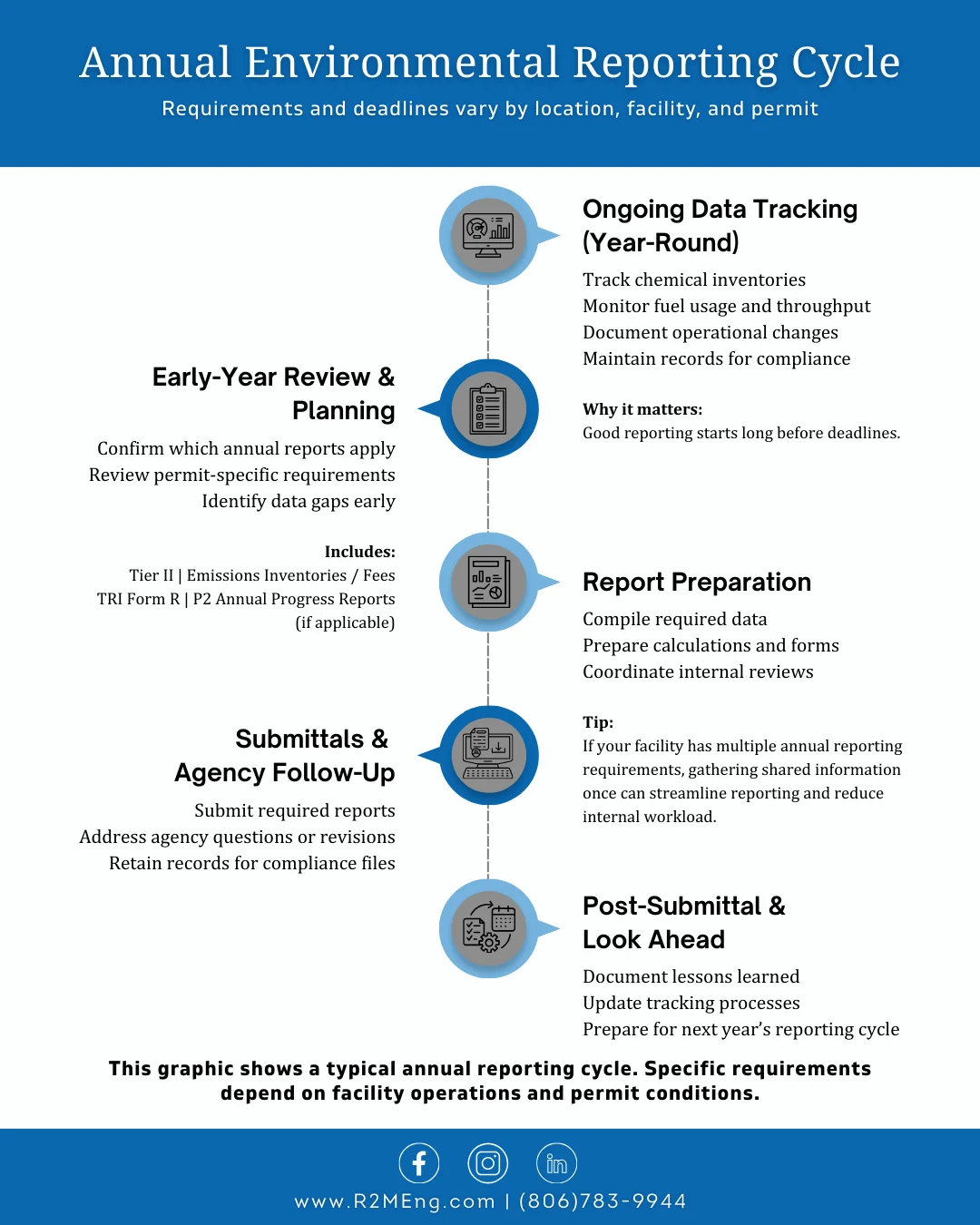
- Tier II Reports for facilities storing regulated chemicals above threshold quantities (Due March 1)
- Air Emissions Inventories
- Emissions Fees required under air permits
- EI – Due March 31
- EI Fee Form – Due June 1, if applicable
- TRI Form R Reports for facilities subject to federal toxics reporting thresholds
- Due July 1
- Pollution Prevention (P2) Annual Progress Reports, where applicable
- Due July 1
Because many of these requirements build on shared data, gathering chemical inventory, throughput, and operational information early can streamline reporting and reduce last-minute compliance challenges.
MSHA Silica Rule Compliance
Mine operators should continue preparing for the 2024 Silica Final Rule, which introduced updated exposure limits and monitoring requirements. Metal and Nonmetal (MNM) mine operators must be in compliance by April 8, 2026.
With the compliance deadline approaching:
- Review existing exposure monitoring programs
- Evaluate engineering and administrative controls
- Plan for documentation and training updates
R2M supports compliance through MSHA 24-Hour New Miner Training, 8-Hour Refresher Training, and MSHA Training Plans, designed to help teams meet regulatory requirements and maintain safe operations.
Want insights like this delivered quarterly? Subscribe to our newsletter for updates across Site Civil/Survey, Environmental, and Safety Services.